

The short answer
Skincare labels list ingredients by their INCI names, from the largest amount to the smallest. Anything at one percent or less can appear in any order at the end. Learn that rule, a handful of common names and what fragrance stands for, and most labels start to make sense.
The order tells you the amounts
Ingredients are listed from the largest amount to the smallest. If water (Aqua) comes first, the product is mostly water. If a butter or an oil comes first, it's mostly that.
This is why the first five or so ingredients tell you the most about a product. A rosehip cream with rosehip oil near the end of a long list contains very little rosehip.
The one percent line
Ingredients present at one percent or less can be listed in any order after the rest. Preservatives, fragrance and many plant extracts usually live down there.
You can't see where that line falls, but the preservative is a good clue. Most preservatives are used at around one percent or less, so anything listed after one is probably there in a tiny amount.
What INCI names are
INCI stands for International Nomenclature of Cosmetic Ingredients. It's a shared naming system, so one ingredient has the same name on labels around the world. A few things help.
- Plants use Latin names. Shea butter is Butyrospermum Parkii Butter, and sweet almond oil is Prunus Amygdalus Dulcis Oil.
- Water is Aqua.
- Common names often appear in brackets, like Rosmarinus Officinalis (Rosemary) Leaf Extract.
- Long chemical names aren't automatically bad. Tocopherol is vitamin E. Glycerin is a gentle humectant that draws moisture into the skin.
Fragrance, parfum and allergens
Fragrance or Parfum on a label can stand for a blend of many ingredients, and brands don't have to list each one. In the EU, fragrance ingredients known to cause allergies, such as linalool or limonene, have to be named separately when they're above a small amount. You'll often see them in products with essential oils, because essential oils contain them naturally.
If your skin is sensitive, unscented products are easier to judge, because everything inside them is on the list.
Claims on the front, facts on the back
The front of the pack is marketing. The back is the ingredient list. Words like natural, clean or dermatologist approved have no single legal meaning for cosmetics in most countries. The ingredient list is regulated, so trust it more. I wrote more about this in what natural means on a skincare label.
A five-minute way to read any label
- Look at the first five ingredients. That's most of the product.
- Find the preservative. Everything after it is likely a small amount.
- Check where the star ingredient from the front of the pack appears.
- Look for Fragrance or Parfum and any allergen names if your skin reacts easily.
- Notice whether the product contains water. If Aqua comes first, it needs a preservative to stay safe, and that's a good thing.
Practice makes it easy
The first few labels take a while. After a week of reading the back of everything in your bathroom, you'll do it in seconds.
My free Beginner's Guide to Natural Body Care walks you through decoding any label, what natural actually means and the claims and myths worth looking past. It's 16 pages, free, straight to your inbox.
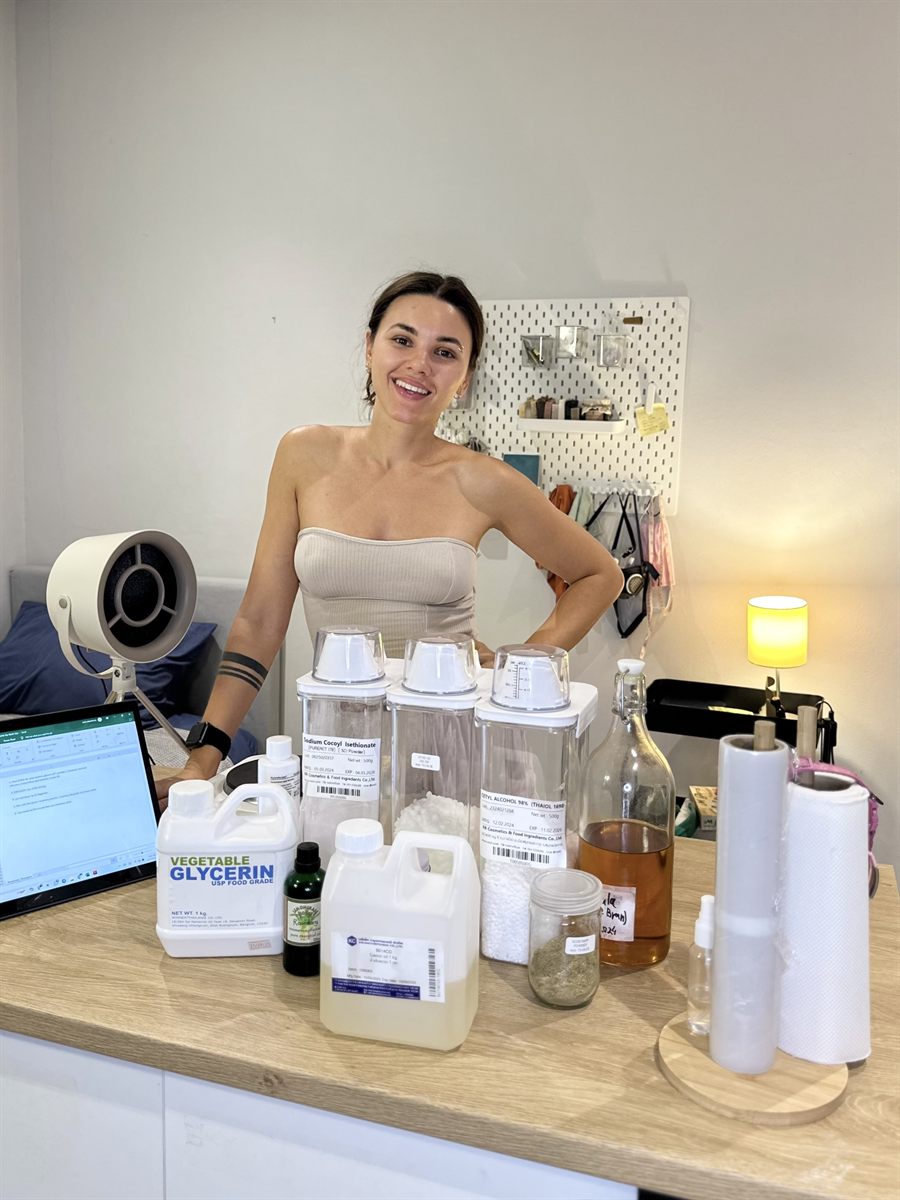
This article is for educational purposes only. It does not provide medical advice or replace professional consultation. Written by Yana, who makes and tests every ARKE formula in Phuket, Thailand.