The short answer
Lotion is water and oil held together by an emulsifier, so it feels light and always needs a preservative. Body butter is butters and oils with no water, so it's richer and simpler to make at home. Body oil is a blend of oils, the easiest to make and lovely on damp skin.
Lotion
Lotion is an emulsion, which means water and oil blended together and kept that way by an emulsifier. Most lotions are mostly water. That makes them light, quick to absorb and pleasant in hot weather.
Because there's water inside, a lotion always needs a preservative, and it takes more care and knowledge to make at home.
Lotion is a good pick for everyday use all over the body, for humid climates and for anyone who doesn't like a rich feel.
Body butter
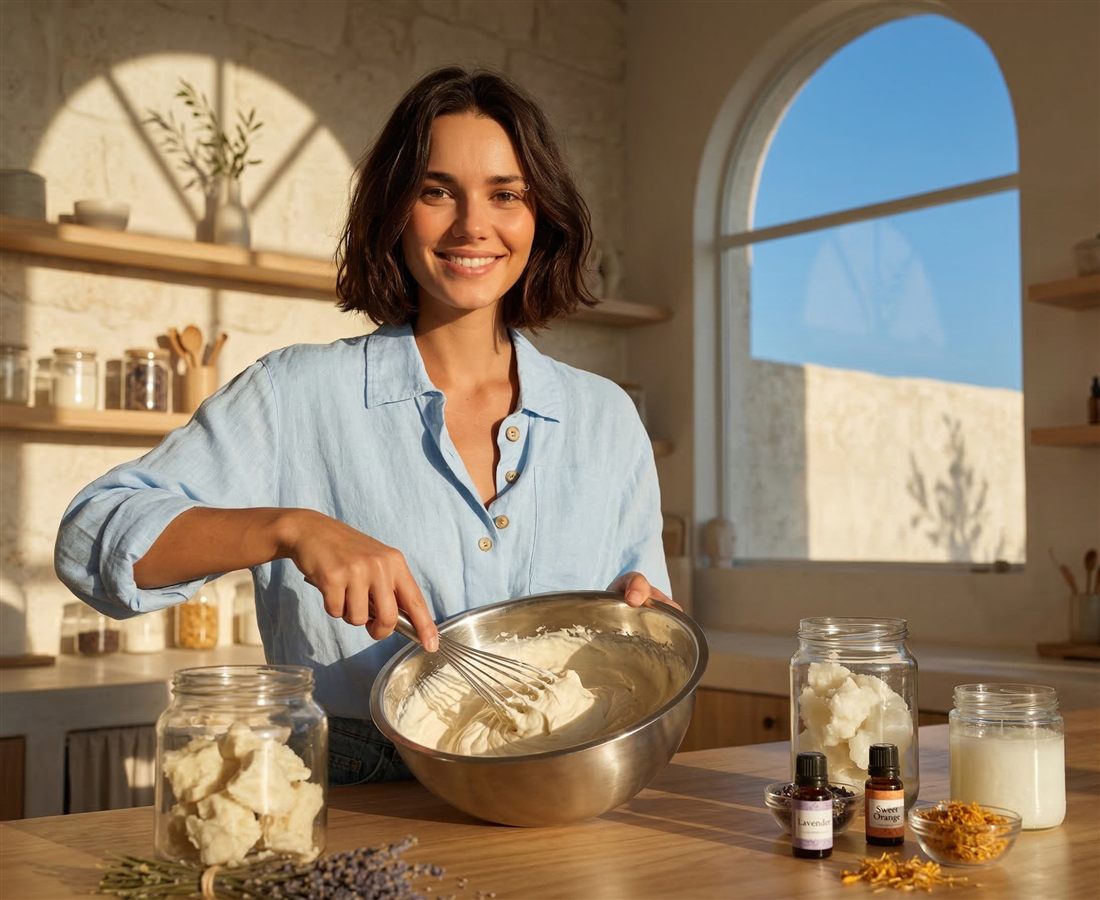
Body butter is made from plant butters such as shea, mango or cocoa butter, plus liquid oils, with no water at all. Whipping adds air, so it turns light and fluffy, and a little goes a long way.
With no water, a body butter doesn't need a preservative against bacteria, though it still needs clean making and good storage to keep the oils fresh. It's richer than a lotion and stays on the skin for longer.
Body butter is lovely for dry spots like elbows, knees and feet, for air-conditioned rooms and for evenings, when you have time to let it sink in.
Body oil
Body oil is the simplest of the three. It's a blend of plant oils, sometimes with herbs infused in them or a little essential oil for scent. It absorbs best on damp skin, straight after a shower.
Oils feel different depending on which ones you choose. Some sink in quickly and feel almost dry, others stay rich and glossy.
How they compare
- Feel. Lotion is the lightest, oil is silky and body butter is the richest.
- Water. Only lotion contains water.
- Preservative. Lotion needs one. Butter and oil don't, but they need good storage.
- Making at home. Body oil is easiest, body butter comes next and lotion takes the most care.
- Shelf life. Water-free products usually keep longer when they're made well.
Does body butter melt in hot weather?
It can soften, and in a very hot room it may melt. A well-balanced formula holds its shape better, and storing it somewhere cool helps a lot. I make mine in Phuket, so heat is something I plan for. If yours turned grainy after melting, here's why body butter goes grainy and how to fix it.
Which should you make first?
If you've never made anything, start with a body oil or a lip balm. When you want something more hands-on, whipped body butter is a satisfying next step. Lotions are best left until you understand emulsifiers and preservatives.
Make your own
My Whipped Body Butter Guide explains how butters, oils and wax work together, and the cooling and whipping steps for a light, non-greasy texture. For body oils, my Oil Infusions guide shows you how to infuse herbs into your own oils.
This article is for educational purposes only. It does not provide medical advice or replace professional consultation. Written by Yana, who makes and tests every ARKE formula in Phuket, Thailand.